

Redear Sunfish vs Bluegill: How to Tell Them Apart and Catch More of Both
By: FishUSA Staff
February 12, 2026
If you spend any time chasing panfish, you’ve probably asked yourself a simple question: What’s the real difference between redear sunfish and bluegill? On the stringer, they look similar, they hit a lot of the same baits, and they share many of the same waters. It’s no wonder plenty of anglers lump them together as “bream” and call it a day.
If you spend any time chasing panfish, you’ve probably asked yourself a simple question: What’s the real difference between redear sunfish and bluegill? On the stringer, they look similar, they hit a lot of the same baits, and they share many of the same waters. It’s no wonder plenty of anglers lump them together as “bream” and call it a day.
But understanding the differences between redear sunfish (shellcrackers) and bluegill sunfish can help you identify fish correctly, target specific species more effectively, and even manage ponds or private lakes better. From the distinctive “red ear” marking to their unique diets and preferred habitats, these two sunfish have more going on than meets the eye.
In this in-depth guide, we’ll break down redear vs bluegill:
- Clear identification tips so you can tell them apart at a glance
- Where each species prefers to live and feed
- How their diets influence bait and lure choice
- Size, growth, and trophy potential for both species
- Practical fishing tactics, tackle recommendations, and table fare comparison
Table of Contents
- Redear Sunfish and Bluegill at a Glance
- Identification Guide: How to Tell a Redear Sunfish from a Bluegill
- Habitat and Distribution: Where You’ll Find Redear vs Bluegill
- Diet and Behavior: What Redear Sunfish Eat vs What Bluegill Eat
- Size, Growth, and Lifespan: Which Gets Bigger?
- Spawning and Seasonal Behavior: Redear Sunfish vs Bluegill
- Fishing for Redear Sunfish vs Bluegill: Baits, Lures, and Tackle
- Redear vs Bluegill on the Table: Taste and Cleaning
- Management, Regulations, and Conservation
- Redear Sunfish vs Bluegill: Quick Comparison Table
- FAQs About Redear Sunfish vs Bluegill
- Conclusion: Don’t Choose Sides—Enjoy Both Redear and Bluegill
Redear Sunfish and Bluegill at a Glance
What Is a Redear Sunfish (Shellcracker)?
The redear sunfish (Lepomis microlophus) is a member of the sunfish family native to the southeastern United States but now stocked in ponds, lakes, and reservoirs across much of the country. Anglers often call them shellcrackers because of their habit of crunching snails and small mussels with specialized throat teeth.
Redear usually live a little deeper than bluegill, relating to firm bottoms, shell beds, and offshore structure. They’re famous for growing to impressive sizes in the right waters—2-pound shellcrackers are the stuff of legend and an unforgettable fight on ultralight tackle.
What Is a Bluegill Sunfish?
The bluegill (Lepomis macrochirus) is probably the most recognizable freshwater panfish in North America. Native to much of the eastern and central U.S., bluegill have been introduced throughout the continent and are common in farm ponds, natural lakes, reservoirs, and slow-moving rivers.
They’re incredibly adaptable, eager biters, and the classic “first fish” for countless anglers. You’ll find bluegill around shallow weeds, docks, and downed timber, as well as offshore structure and deeper basins in larger lakes.
Why These Two Species Are So Commonly Confused
Both redear and bluegill share the classic sunfish shape: deep-bodied, laterally compressed fish with a rounded profile. They often school together, use similar spawning areas, and hit similar baits. To the untrained eye, that makes bluegill vs redear sunfish look almost identical.
Fortunately, once you know what to look for—especially around the “ear flap”—you’ll be able to separate them quickly and reliably.
Identification Guide: How to Tell a Redear Sunfish from a Bluegill
Body Shape, Color, and Markings
In broad strokes, redear and bluegill look similar, but there are reliable visual clues:
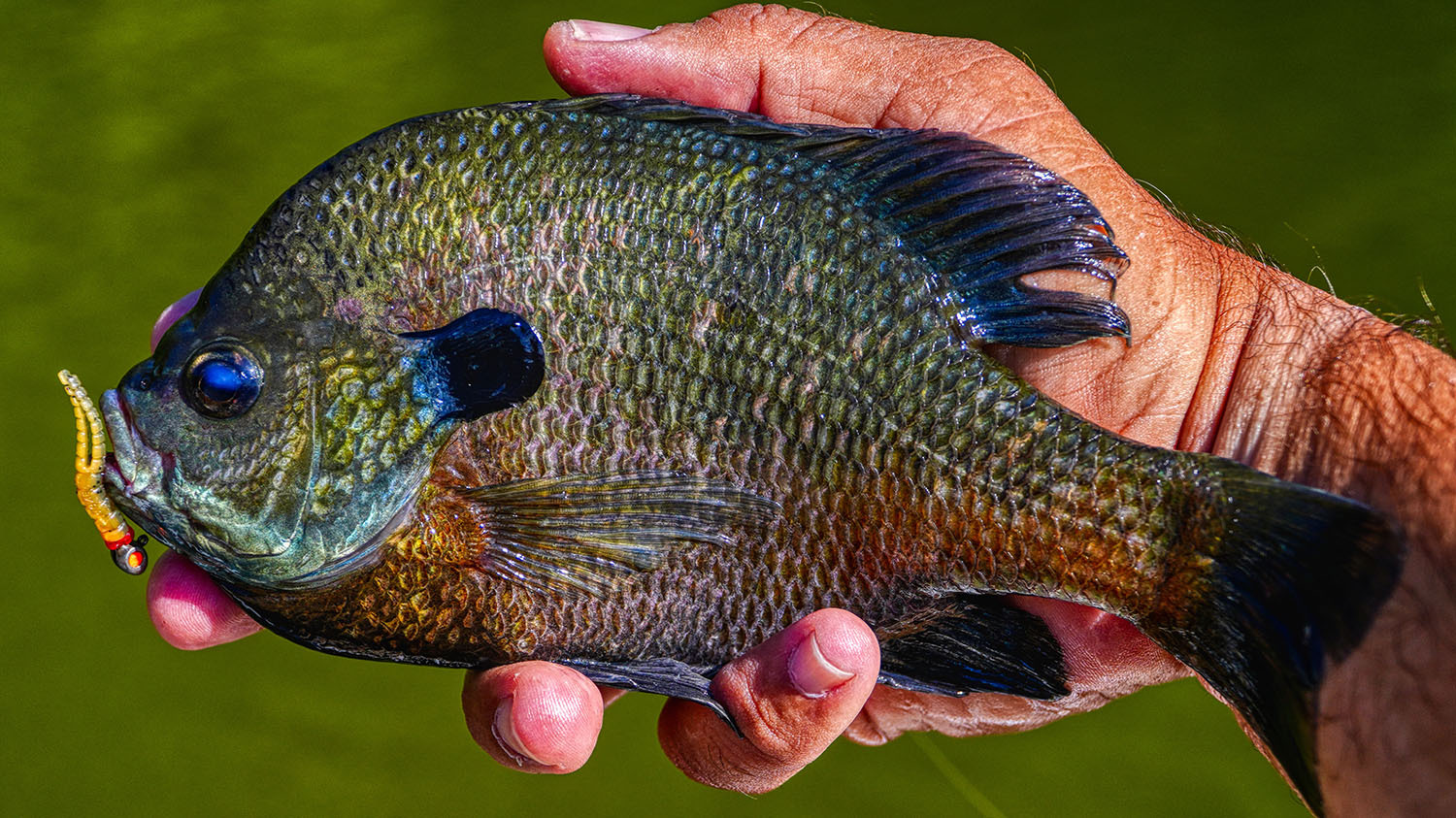
- Bluegill: Typically show more distinct dark vertical bars along their sides, with bluish or greenish hues on the head and body. Their breast and belly can range from yellow to orange.
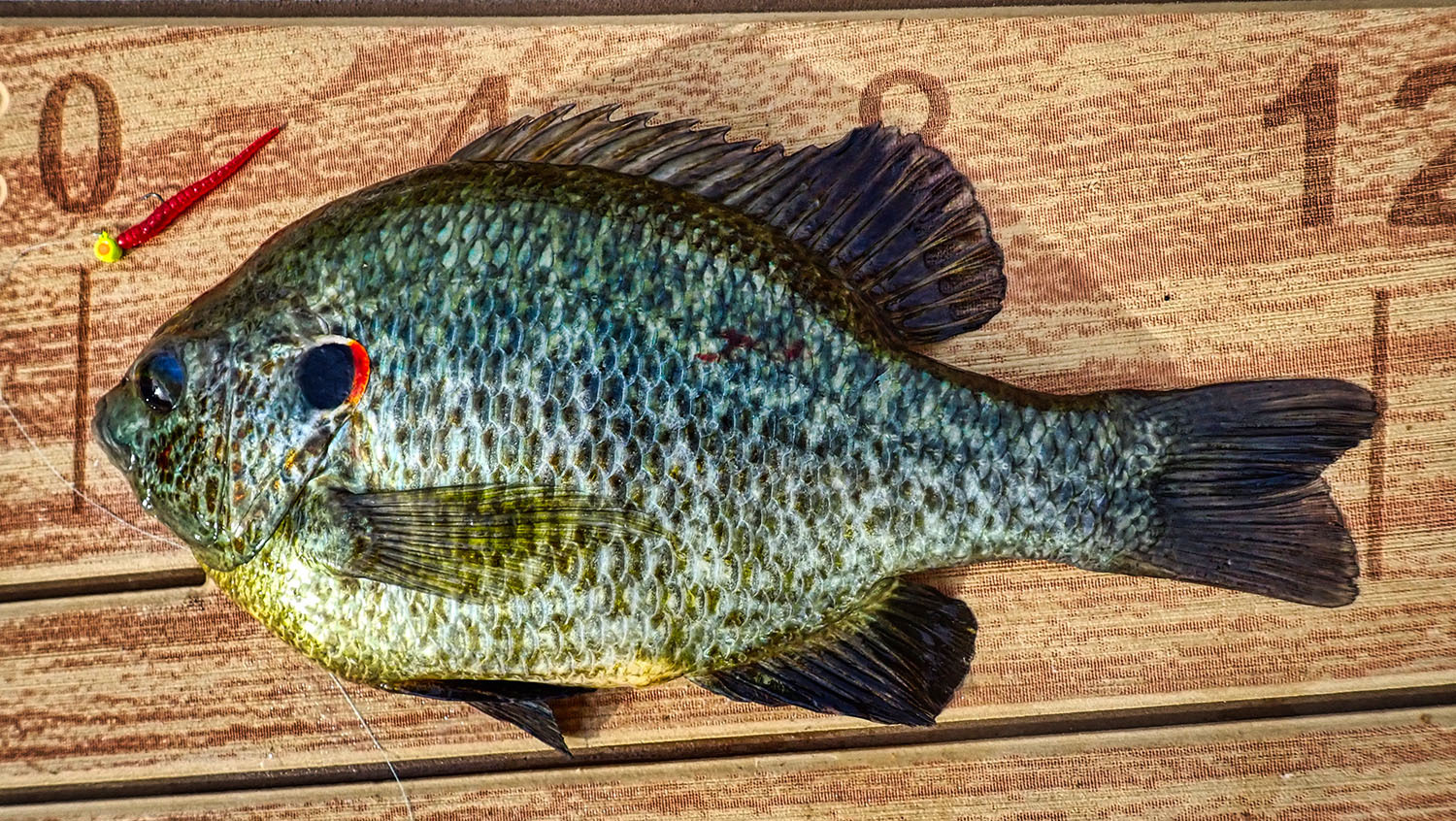
- Redear: Often appear more mottled or speckled, with olive and bronze tones. Their vertical bars are usually less pronounced, and their flanks can look more “washed out” compared to a classic bluegill.
Color can vary with water clarity, spawning phase, and local genetics, so don’t rely on color alone.
The Ear Flap: The Best Redear vs Bluegill Clue
The most distinctive feature in the redear sunfish vs bluegill puzzle is the opercular flap—the “ear” just behind the eye:
- Redear sunfish: Black ear flap with a red, orange, or sometimes yellow margin on the back edge. This colored border gives them the “redear” name.
- Bluegill: Solid black ear flap with little to no colored margin. On some fish you may see a faint pale outline, but not the bold red/orange of a redear.
When in doubt, look at the ear. If you see a clear red/orange rim, you’re looking at a redear or possibly a hybrid with redear influence.
Mouth Size and Jaw Shape
Subtle but important: redear have a slightly larger mouth than bluegill. Their jaw structure and specialized teeth help them crush snails and small mussels. Bluegill mouths are smaller and more suited to picking insects, larvae, and tiny invertebrates.
In practical terms, that means:
- Bluegill prefer tiny hooks, micro jigs, and small baits.
- Redear can handle slightly larger hooks and morsels, especially bottom-bouncing baits resembling snails or small crustaceans.
Juveniles and Hybrids
Young fish are harder to ID. Juvenile redear and bluegill often share vague markings and muted colors. To complicate things further, sunfish commonly hybridize, producing fish with mixed features.
When you’re faced with a tricky fish:
- Start with the ear flap color and shape.
- Look for vertical bars (strong bars usually point toward bluegill influence).
- Consider habitat—deep shell bed vs shallow weed line.
If it truly looks like a mix, it might be a hybrid, which is common in heavily populated panfish lakes.
Habitat and Distribution: Where You’ll Find Redear vs Bluegill
Native Range and Stocked Waters
Bluegill have an enormous range. They’re native to much of the eastern and central U.S., but have been widely stocked across the continent and even beyond. If there’s a warm-water pond or lake in your area, there’s a good chance it holds bluegill.
Redear sunfish originated in the southeastern U.S., but have been introduced into many reservoirs and ponds as a desirable sport and forage species. They’re especially common in lakes with good water quality and hard-bottom areas.
Preferred Habitat: Depth, Structure, and Water Clarity
Within the same water body, redear vs bluegill habitat usually looks a bit different:
- Redear: Favor deeper water, especially areas with firm bottom, shell beds, and subtle offshore structure. They’re often associated with points, drop-offs, and the edges of submerged vegetation.
- Bluegill: Common in shallower water, especially around weeds, brush, docks, and fallen trees. They’ll also use offshore structure, but they’re usually easier to find tight to visible cover near shore.
Both species adjust depth with the seasons, but redear are typically the “deeper cousins” of the two.
Shared Waters: Lakes, Ponds, and Reservoirs
In many lakes and ponds, you’ll find both species coexisting. Bluegill often dominate the shallow, weedy zones, while redear hold deeper, especially where they can find snails and shellfish. That means your redear vs bluegill catch ratio can change dramatically just by sliding a few feet deeper or shallower.
Diet and Behavior: What Redear Sunfish Eat vs What Bluegill Eat
Redear Sunfish Diet: The Shellcracker’s Specialty
Redear sunfish earned the name shellcracker for a reason—they’re built to crush hard-shelled prey:
- Snails and aquatic mollusks
- Small clams and mussels
- Bottom-dwelling insect larvae and crustaceans
Specialized pharyngeal teeth at the back of their throat allow them to crack shells and access the protein-rich meat inside. In some waters, they play a valuable role in controlling snail populations, which can help reduce certain fish parasites tied to snails.
Bluegill Diet: Insects, Larvae, and Opportunistic Feeding
Bluegill are generalists and opportunists. Their diet includes:
- Insect larvae and nymphs
- Dragonflies, damselflies, and other aquatic insects
- Small crustaceans and zooplankton
- Occasional small minnows or fry
They’ll feed throughout the water column, often shallow, and respond well to a wide range of baits and lures.
How Diet Affects Fishing Tactics
Understanding diet is one of the best ways to turn redear sunfish vs bluegill knowledge into more fish in the boat:
- For redear: Focus on bottom-oriented presentations—small pieces of worm, nightcrawler sections, or tiny creature-style plastics fished near the bottom around hard substrate.
- For bluegill: Use small live baits and micro lures under floats or slowly jigged around shallow cover to mimic insects and invertebrates.
Size, Growth, and Lifespan: Which Gets Bigger?
Average Size and Trophy Potential
In many waters, bluegill are more abundant and commonly caught, but redear often win in the size department:
- Bluegill: Typical keepers run 6–8 inches, with 9–10 inch fish considered quality and anything over 10 inches a trophy in many regions.
- Redear: Frequently run similar lengths but can pack on more weight. It’s not uncommon for shellcrackers in fertile lakes to reach or exceed 2 pounds.
Both species can live several years, with growth strongly influenced by forage, water quality, and population density.
Growth Rates and Conditions
Fast-growing bluegill and redear need:
- Abundant food (insects, snails, crustaceans)
- Balanced predator-prey relationships (enough predators to keep sunfish numbers in check)
- Good water quality and habitat variety
For pond owners and lake managers, this means managing both species together can create great fishing and a healthy ecosystem.
Spawning and Seasonal Behavior: Redear Sunfish vs Bluegill
Spawning Season and Water Temperature
Both redear and bluegill are spring and early summer spawners, usually when water temps break into the upper 60s and low 70s (°F). In warmer climates, bluegill may spawn multiple times through the warm season, while redear often spawn once or possibly twice.
Nesting Behavior and Spawning Beds
Both species are colonial nesters. Males fan out saucer-shaped beds in the substrate, often in clusters:
- Bluegill: Typically nest in shallow coves and flats with sand, gravel, or firm mud.
- Redear: May spawn slightly deeper, closer to harder bottoms and areas where snails are abundant.
During this time, aggressive males guard nests and will hammer small jigs, worms, and soft plastics presented over the colony.
Post-Spawn and Seasonal Movements
After the spawn:
- Bluegill often remain shallow around weeds and cover through much of the summer, then slide deeper or suspend in fall and winter.
- Redear typically move deeper sooner, relating to shell beds, drop-offs, and offshore structure for much of the year.
Target shallow bluegill beds in spring, then gradually move deeper as summer progresses to locate both species.
Fishing for Redear Sunfish vs Bluegill: Baits, Lures, and Tackle
Best Baits and Lures for Redear Sunfish
Because redear focus on bottom-dwelling prey, your best bets are:
- Pieces of nightcrawler or red worms on small hooks
- Tiny soft-plastic nymphs, creature baits, or craw imitations
- Small jigs worked slowly along the bottom near shell beds and hard cover
Let the bait rest on or just off bottom, occasionally dragging or gently hopping it to mimic natural forage. In clear water, lighter line and subtle presentations are key.
Related: Shall Cracker 101: How To Catch Redear Sunfish
Best Baits and Lures for Bluegill
Bluegill will eat just about anything small enough:
- Small pieces of worm or nightcrawler
- Crickets or grasshoppers under a float
- Micro jigs tipped with plastics or bait
- Tiny spinners and inline spoons
A classic setup is a small hook, split shot, and a float set just above bluegill holding depth around weeds, docks, or downed trees.
Learn more: Check out our guide on the Best Bluegill Baits & Lures
Recommended Tackle for Panfish
For both species, light tackle maximizes fun and sensitivity:
- Rod: 5–7 ft ultralight or light-power spinning rod
- Reel: 500–1000 size spinning reel
- Line: 2–6 lb monofilament or light braid with a fluoro leader
Smaller hooks (sizes 8–12) and small jigs (1/64–1/16 oz) help you match the food both species are feeding on.
Float Fishing vs Bottom Fishing
As a general rule:
- Float rigs: Shine for shallow bluegill around cover and for sight-fishing beds in clear water.
- Bottom rigs: Work best for redear around deeper shell beds, points, and drop-offs.
Don’t be afraid to experiment. Sometimes bluegill will stack deeper, and a tight-line or slow-drag bottom rig will outfish a float, especially in cool water or high-pressure situations.
Redear vs Bluegill on the Table: Taste and Cleaning
Do Redear and Bluegill Taste Different?
Ask ten anglers, and you’ll get eleven answers, but the general consensus is that both redear sunfish and bluegill taste excellent. Both offer mild, sweet, flaky white meat that fries up beautifully.
Some anglers claim redear have slightly firmer fillets or richer flavor due to their snail- and shellfish-based diet, but the difference is subtle. Most people will happily eat either without complaint.
Cleaning and Filleting Tips
Panfish are small, so efficiency is key:
- For small fish, scaling and cleaning them whole can be quicker than filleting.
- For larger bluegill and especially big redear, filleting yields nice boneless pieces.
- A sharp, flexible fillet knife makes a huge difference in speed and waste reduction.
Simple Recipes and Cooking Methods
You don’t need anything fancy to make panfish shine:
- Lightly breaded and pan-fried in hot oil
- Oven-baked with lemon, herbs, and a drizzle of butter
- Fish tacos using fried fillets, slaw, and a squeeze of lime
Whatever recipe you choose, don’t overcook—the goal is tender, flaky fillets, not fish jerky.
Management, Regulations, and Conservation
Know Your Local Rules
Bag limits and size regulations for bluegill and redear vary by state and even by water. Before keeping a cooler of panfish, check your local regulations via your state’s fisheries or natural resources agency website.
Stocking and Pond Management
For pond owners, bluegill and redear both play important roles:
- Bluegill: Key forage for bass and popular sport fish for kids and adults.
- Redear: Help control snail populations and add another dimension of fishing.
A balanced pond often includes largemouth bass, bluegill, and redear, with stocking ratios tuned for local conditions.
Responsible Harvest and Conservation
To protect quality panfish fishing:
- Harvest plenty of small to medium fish where rules allow, but consider releasing the largest “trophy” fish to maintain strong genetics.
- Avoid tearing up spawning beds with boats or wading during the spawn.
- Handle fish gently if releasing—wet hands, quick photos, and smooth releases.
Redear Sunfish vs Bluegill: Quick Comparison Table
| Feature | Redear Sunfish | Bluegill |
|---|---|---|
| Average Size | Similar length, often heavier-bodied | Abundant 6–8", 9–10" quality fish |
| Trophy Potential | Regularly over 1 lb; 2+ lb possible | 10–12" trophies; big fish highly prized |
| Best Baits | Worm pieces, bottom jigs, snail imitators | Worms, crickets, micro jigs, small spinners |
| Taste | Excellent, mild and flaky | Excellent, mild and flaky |
FAQs About Redear Sunfish vs Bluegill
Are redear sunfish and bluegill the same fish?
No. They’re closely related sunfish species, but they differ in ear flap coloration, diet, typical habitat, and growth patterns.
Is a shellcracker the same as a redear sunfish?
Yes. “Shellcracker” is a common nickname for redear sunfish, referring to their habit of crushing snails and shellfish.
Which gets bigger, redear sunfish or bluegill?
Both can grow large, but redear often reach heavier weights at similar lengths, and trophy shellcrackers over 2 pounds are more common than equivalent bluegill in many waters.
Do redear sunfish fight harder than bluegill?
Both fight hard for their size, but many anglers feel big redear put up an especially bulldog-like battle, especially on ultralight tackle.
Can redear and bluegill live together in the same pond?
Yes. They commonly coexist in ponds and lakes. In fact, stocking both species can improve fishing variety and help control snail populations.
Are redear sunfish good to eat compared to bluegill?
Absolutely. Both redear and bluegill are excellent on the table, with mild, flaky white fillets. Some anglers slightly prefer redear, but most happily eat either.
What is the best bait for redear sunfish vs bluegill?
For redear, focus on worms and bottom-oriented baits near hard bottom or shell beds. For bluegill, use worms, crickets, and micro jigs under floats around weeds and shallow cover.
Conclusion: Don’t Choose Sides—Enjoy Both Redear and Bluegill
At the end of the day, there’s no real need to pick a winner in the redear sunfish vs bluegill debate. Both are fantastic sportfish, both taste great, and both offer outstanding opportunities for fun, family-friendly fishing.
By learning how to tell redear from bluegill, understanding where each species prefers to live, and tailoring your tactics to their diets and habits, you’ll catch more fish, more consistently—whether you’re fishing a tiny farm pond or a massive reservoir.
Next time you’re out on the water, take a closer look at those panfish:
- Check the ear flap color and body pattern.
- Experiment with shallow float rigs for bluegill and deeper bottom rigs for redear.
- Keep notes on where and how you caught each species.
If you found this guide helpful, share it with a friend who loves panfish. Tight lines—and may your next “bream” turn out to be the shellcracker or bull bluegill of a lifetime.
Shop Panfishing Tackle & Gear